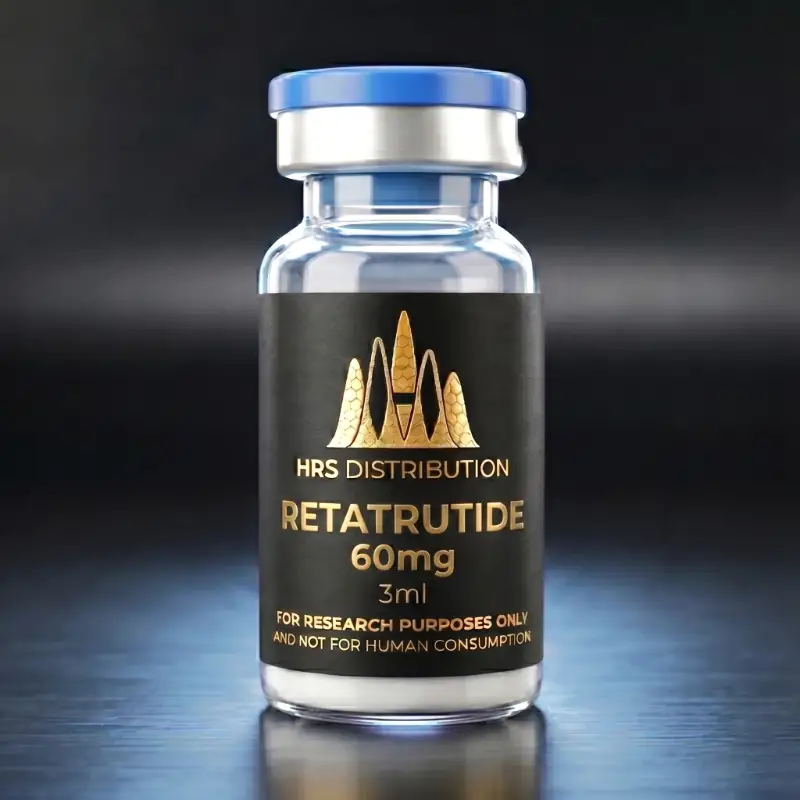
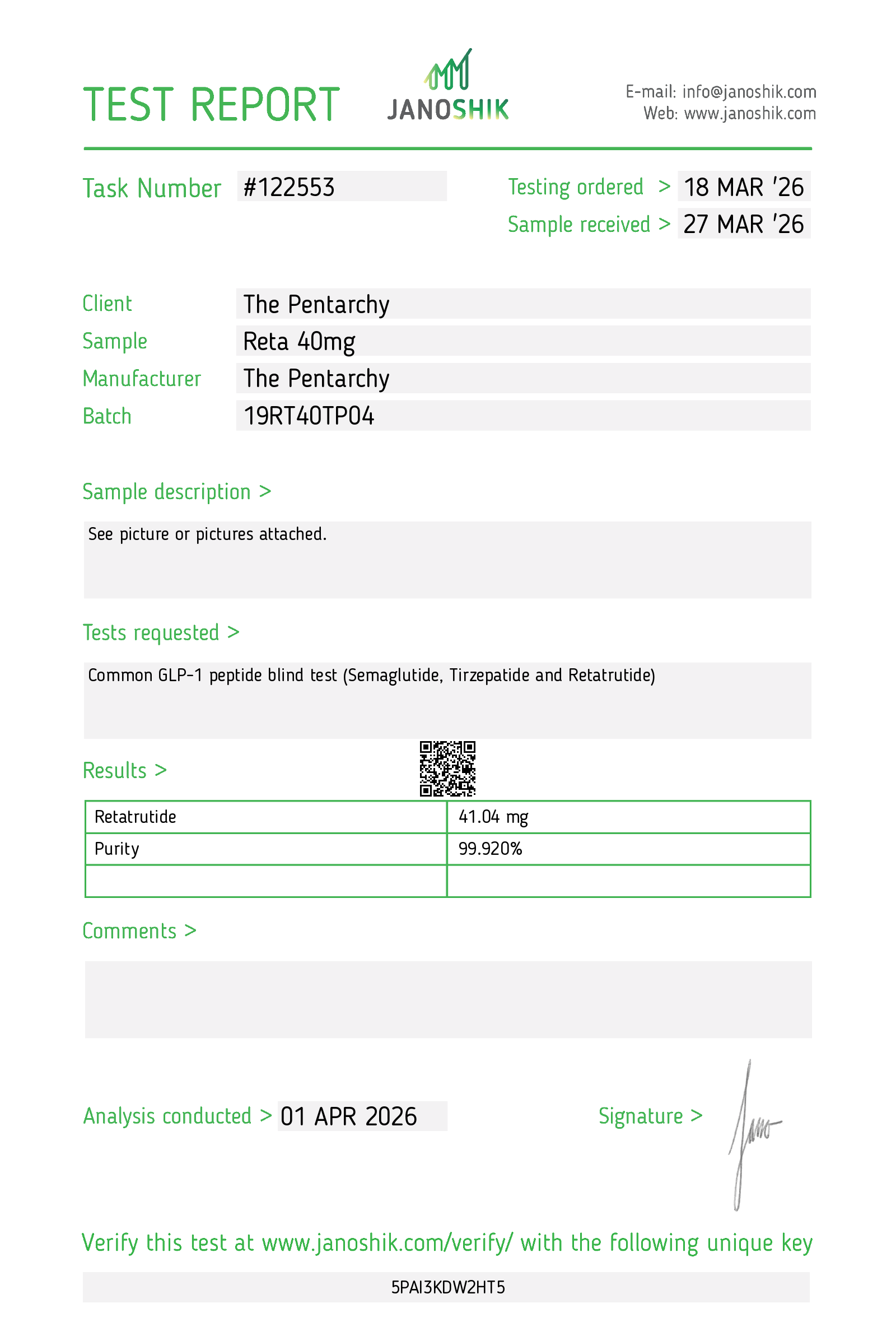
Retatrutide LY3437943
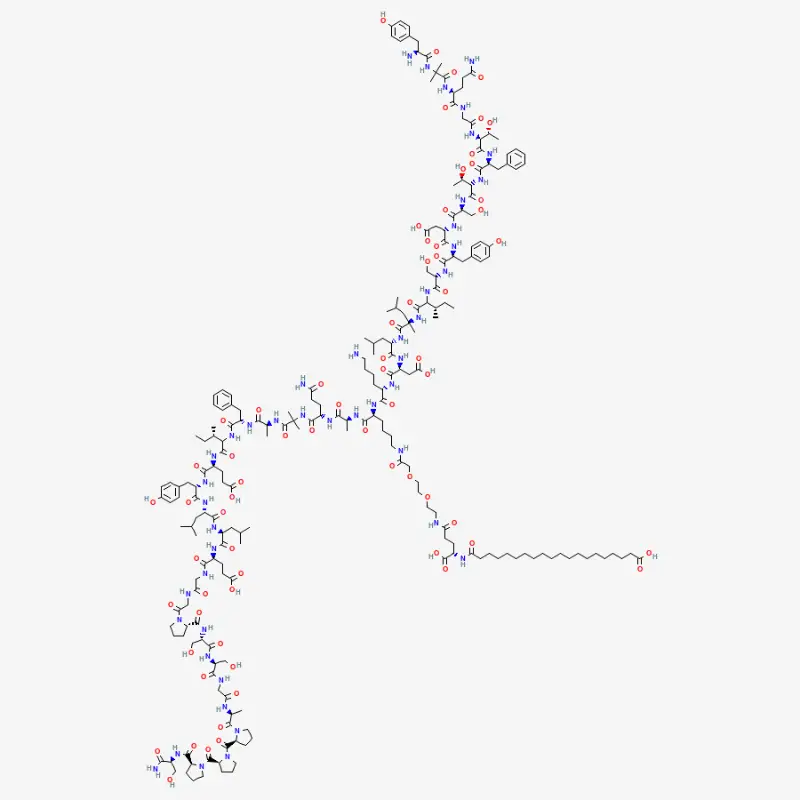
A breakthrough in unimolecular polypharmacology. Advanced 39-amino acid triple-agonist peptide (C221H342N46O68) targeting the GIP, GLP-1, and Glucagon pathways.
Retatrutide represents the evolution of polypharmacology, advancing beyond dual-agonists to engage three distinct G-protein coupled receptors (GPCRs) simultaneously. This unimolecular design triggers a unique metabolic signal cascade, investigated for its profound influence on glucose homeostasis, appetite suppression, and hepatic fat oxidation. By integrating the Glucagon receptor (GCGR) alongside the established GIP and GLP-1 pathways, researchers can observe shifts in energy expenditure and lipid mobilisation not possible with previous-generation peptides.
Primary Modulator
Exhibiting the strongest affinity, GIPR agonism is studied for its role in insulin secretion and white adipose tissue metabolic efficiency.
The Glucagon Factor
GCGR activation targets hepatic fat oxidation and metabolic thermogenesis, potentially driving significant shifts in basal energy expenditure.
The 4731.33 Da structure is a highly stable linear sequence engineered for multi-receptor affinity. Research focus remains on the specific amino acid residues that facilitate simultaneous binding to the GLP-1R (0.77nM) and GCGR (5.79nM) sites.
- Triple Agonism: GIP + GLP-1 + GCGR (Retatrutide)
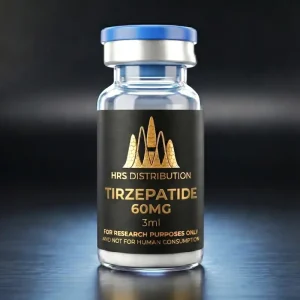
- Dual Agonism: GIP + GLP-1 (Tirzepatide)
- Single Agonism: GLP-1 only (Semaglutide)
- Lipidomics: Direct Glucagon-mediated fat oxidation.
- Energy: Non-shivering thermogenesis induction.
In metabolic models, Retatrutide is extensively investigated for its impact on Hepatic Steatosis reversal and Glomerular Permeability. Researchers often map the activation of Adenylate Cyclase and the subsequent secondary messenger spikes (cAMP) to determine the volumetric efficiency of the triple-signalling pathway.
Investigating the activation of brown adipose tissue (BAT) through combined GLP-1 and Glucagon agonism.
Analysis of shifts in triglyceride fractions and hepatic lipid profile clearance under GCGR engagement.
Supplied lyophilised for maximum sequence integrity during logistics.
- Dry Storage: -20°C for >12 months; 2-8°C for <6 months.
- Liquid Stability: Must be refrigerated (2-8°C) once reconstituted.
- Solubility: Water (5mg/ml), PBS, or DMSO.
Strict adherence to laboratory SOPs is required to maintain the 39-amino acid chain.
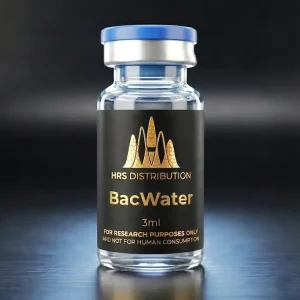
- Solvent: Sterile Bacteriostatic Water or PBS.
- Technique: Slow sidewall induction; do not agitate the puck.
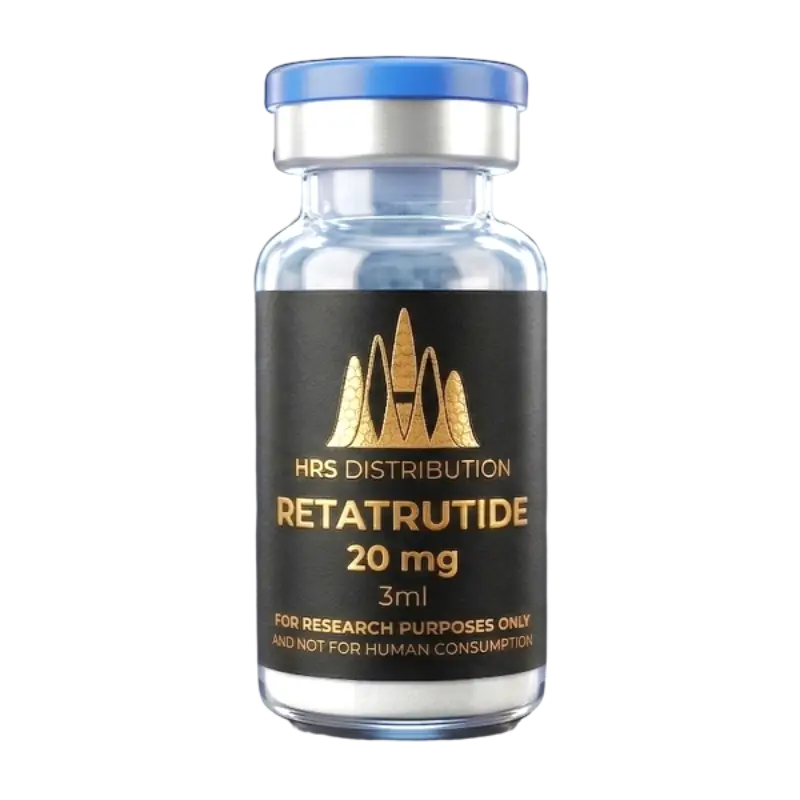
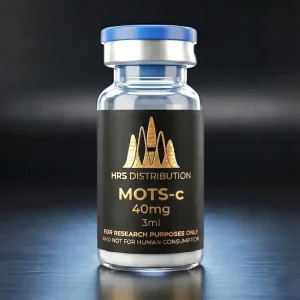
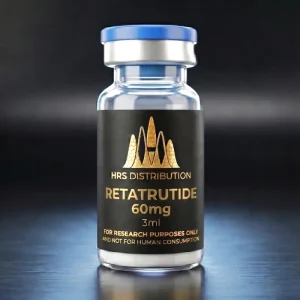
- Unit Sizes: 20mg, 30mg, 40mg, and 60mg configurations.
WARNING: This compound is a chemical reagent supplied exclusively for in-vitro and in-vivo laboratory research. It is NOT a drug, medication, or food supplement. Strictly prohibited for human or veterinary administration. Lawful handling is the sole responsibility of the professional user. HRS Distribution assumes no liability for applications outside of laboratory scientific research.
Reviews
There are no reviews yet.